Art Journaling for Calm: The No-Talent-Required Practice for a Busy Mind
Art journaling is the calming practice that intimidates people out of the very benefit it offers — the ‘I can’t draw’ reflex that mistakes the point entirely. It’s not about talent; it’s about the process. The guide: the therapy-adjacent case, how to start with zero skill and the prompts-and-materials to begin today.
The Art-as-Calm Case
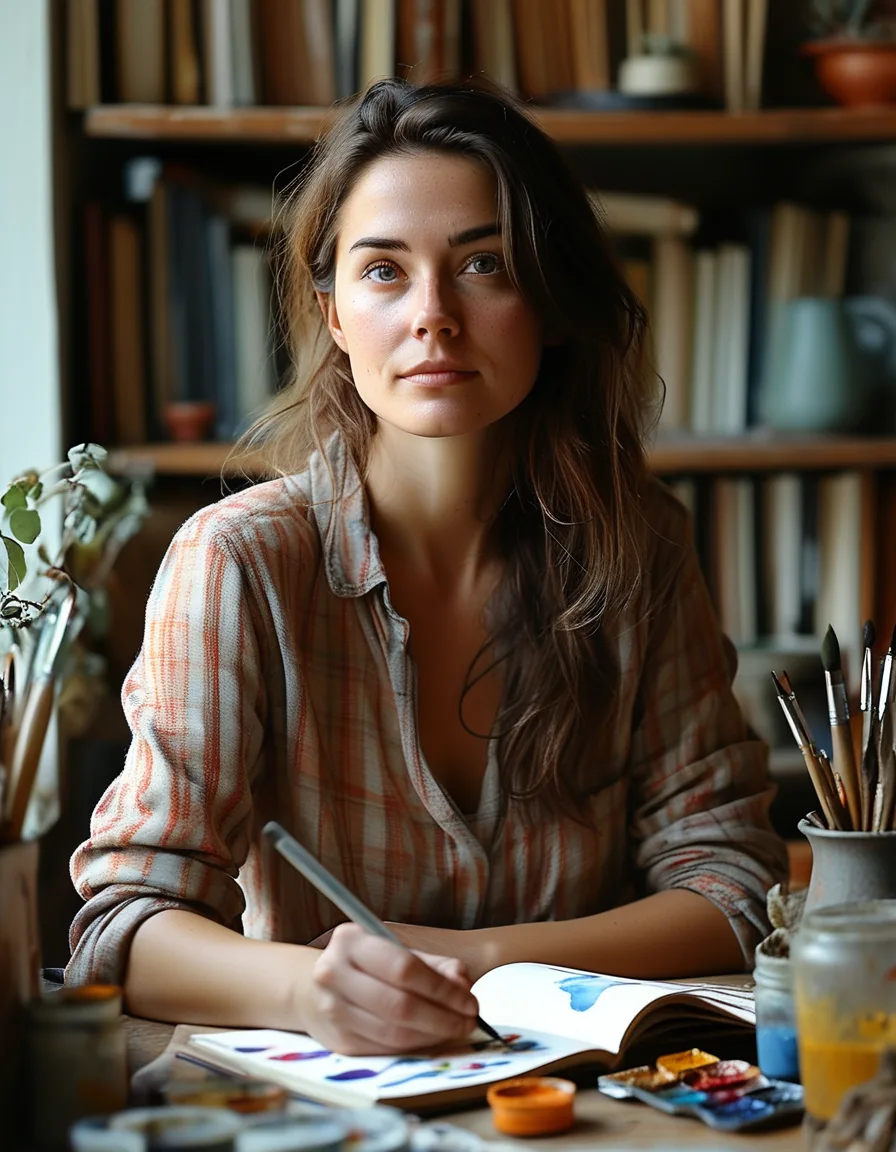
Why making marks soothes: the process-over-product truth (the calming benefit living in the DOING, not the result — the no-audience, no-judgment creation; the drawing-for-stress-relief chapter’s core insight), the flow-state access (the absorbing, present-moment focus that art induces — the mind-quieting engagement; the worries crowded out by the making), the emotional-processing angle (the feelings expressed non-verbally on the page — the art as the outlet words can’t always reach; the journaling-meets-art benefit), the mindfulness-in-color (the sensory, present-tense experience of paint-and-pen — the meditative mark-making; the mindful-movement chapter’s still cousin), and the accessible-to-everyone reality (the no-talent-required, anyone-can-do-this truth — the five-minute-sketch chapter’s welcome; the art-journal as the low-barrier calm tool).
The Start-Without-Skill Method
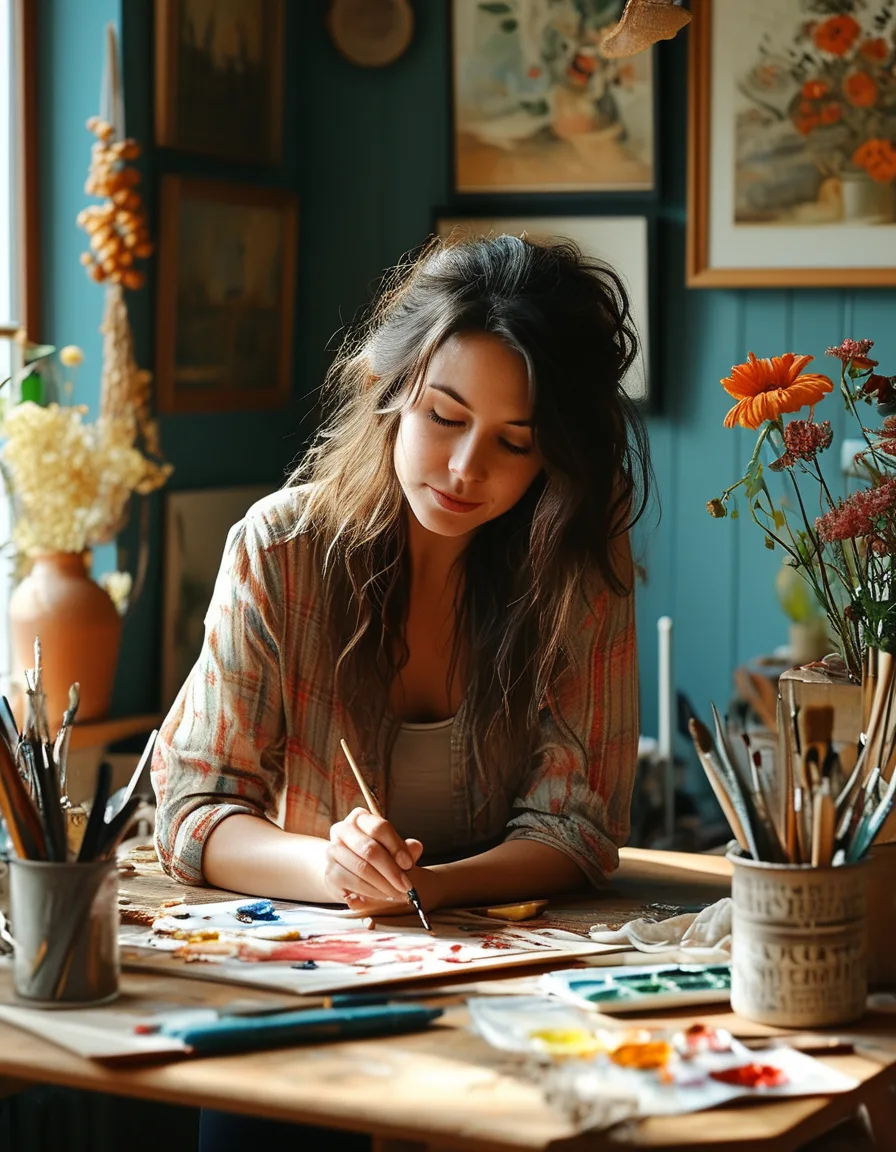
Beginning today, talent optional: the reframe-first move (the ‘I can’t draw’ released — the this-isn’t-about-skill permission; the ugly-art-is-fine, even the-point liberation), the abstract-and-expressive start (the color, shape, pattern and texture over the realistic drawing — the no-representation-required approach; the scribble-and-swirl freedom), the mixed-media ease (the collage, the words, the paint blobs, the stickers — the anything-goes page; the pressure-off variety), the fill-the-page-freely habit (the mark-making without a plan — the intuitive, in-the-moment creation; the trust-the-process from the watercolor chapter), the no-comparison rule (the your-journal-for-you, not-for-Instagram — the private-practice protection; the comparison that kills the calm), and the just-start cue (the pen-to-paper before the overthinking — the done-is-better-than-perfect; the begin-messy permission).
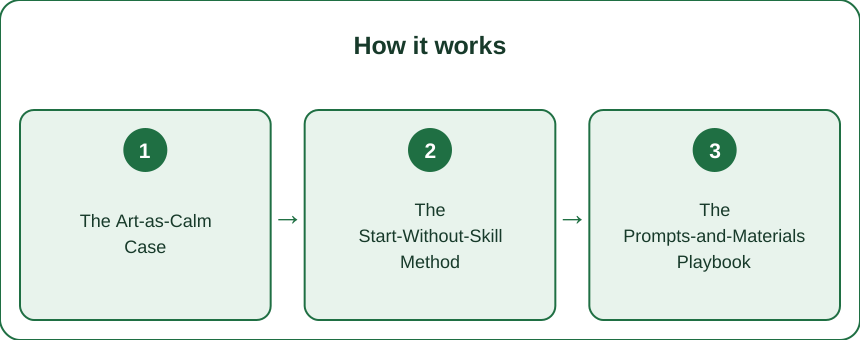
The Prompts-and-Materials Playbook
The practical toolkit: the minimal-materials start (the notebook and a pen, upgraded-later to paint-and-color — the no-big-investment beginning; the budget-friendly art from the budget chapters), the prompt menu (the ‘paint your mood in color’, the ‘fill a page with one shape’, the ‘collage how today felt’, the ‘draw the sound of your breath’ — the starting-points that dissolve the blank-page freeze; the do-one-prompt approach), the emotion-color mapping (the feelings-to-colors intuitive exercise — the mood made visible; the processing-through-color), the daily-or-weekly rhythm (the little-and-often practice — the five-minutes-counts; the sustainable creative habit from the sketch chapter), the free-and-messy permission (the imperfect, private, no-rules pages — the calm that the pressure-free approach protects), and the frame (art journaling as the no-talent-required, process-focused calm practice — the marks-on-a-page that quiet a busy mind; the ‘I can’t draw’ reframed into ‘I can make calm’). No talent needed, process over product, just start: the calm, journaled in color.
Art journaling calms a busy mind through the PROCESS, not the product — ‘I can’t draw’ misses the point entirely. Start with color, shape and collage over realistic drawing, keep it private and imperfect, and try one prompt: paint your mood. No talent required, just marks on a page.
Keep Reading
This article is for general informational and styling purposes only. Fit, sizing, and product availability may vary.