Why Your Creative Practice Collapses the Moment the Days Get Shorter
Quick Answer: Most personal creative practices are scheduled for the evening, and evenings in autumn lose both daylight and energy at the same time. The practice did not fail - its time slot did. Move the session earlier, shorten it to something you can complete on a bad day, and add a dedicated lamp so the room stops signalling that the day is over. Most people rebuild the habit in about two weeks once the slot moves.
You drew almost every day in July. It is late October and you have opened the sketchbook twice.
What changed is not your commitment. It is that your session was scheduled at 7pm, and 7pm is a completely different thing now.
Why does the evening slot stop working specifically?
Because two separate things happen to evenings in autumn and they compound.
The first is light. In much of the country, sunset moves from around 8:30pm in mid-summer to around 5:30pm by late October, and then the clock change takes another hour off in one night. A 7pm session that happened in daylight is now happening in the dark.
That matters more than it sounds. Darkness is a strong signal to wind down, and a room lit by a single overhead bulb reads as end-of-day rather than as a working space.
The second is accumulated fatigue. Evening energy is whatever survives the day, and autumn days tend to demand more - colder commutes, more illness, more disrupted schedules. In summer, an evening practice draws on a surplus. In autumn it draws on a deficit.
The practice did not weaken. It was scheduled in a slot that stopped being viable, and no amount of resolve fixes a slot problem.
What is the smallest version of your practice?
The habit survives the winter at whatever size it can be completed on your worst day, not your best.
Most people set their session length during a good season and then treat that length as the definition of the practice. A 45-minute session in July becomes the standard, and when a 45-minute session stops being available, the natural conclusion is that the practice is not happening.
Define a floor instead. Ten minutes. One page. One small study. The requirement is that it is genuinely completable on the worst evening of the month.
This is not lowering standards - it is protecting the streak that makes the good sessions possible. A practice that runs at ten minutes through November is intact and ready to expand in February. A practice that demanded 45 and got zero is gone.
What surprises people is how often the ten-minute session turns into forty. Starting is the expensive part; continuing is cheap. But you only get the forty by permitting the ten.
What actually helps: light, position, and one fewer decision
Three practical changes cover most of the seasonal drop.
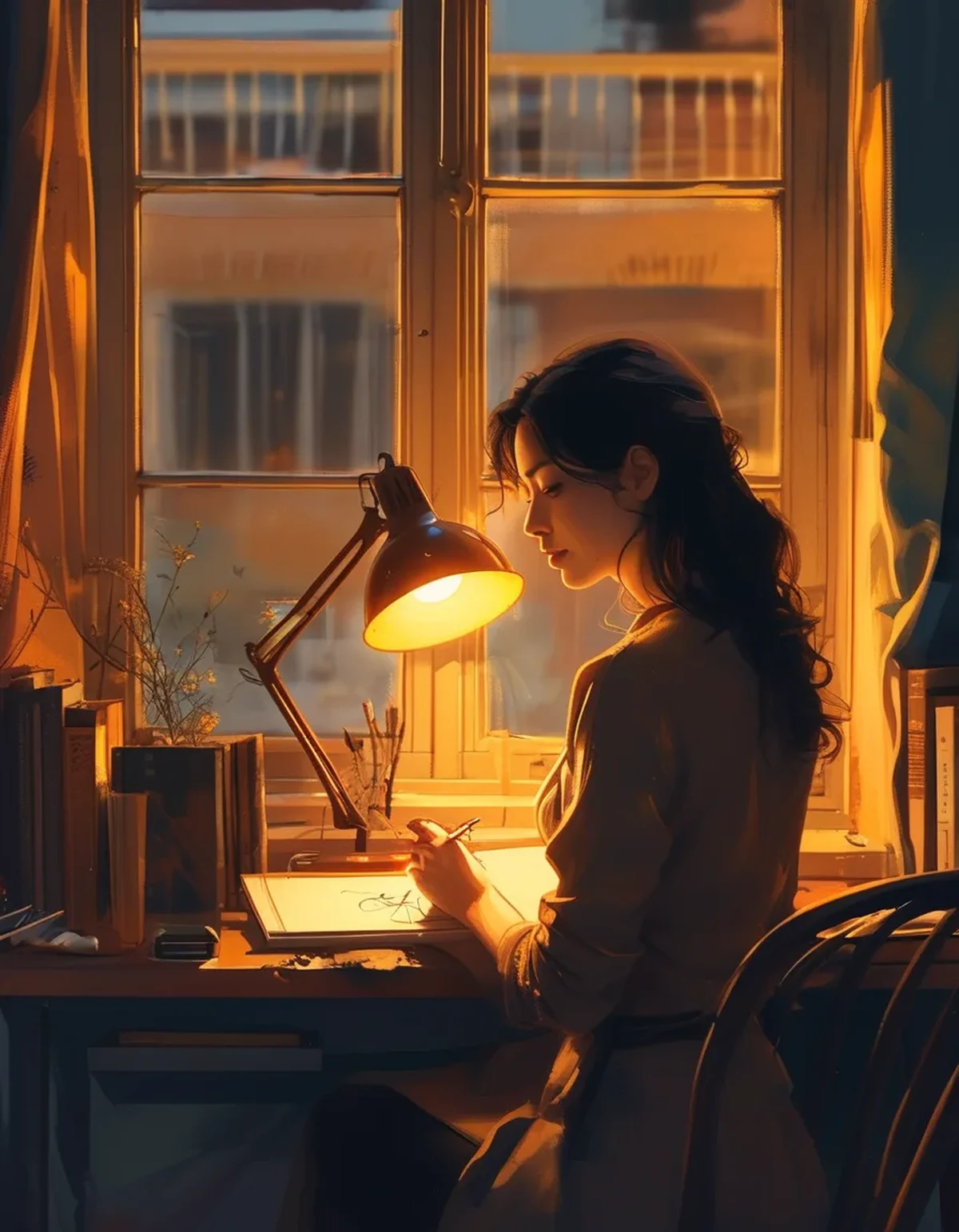
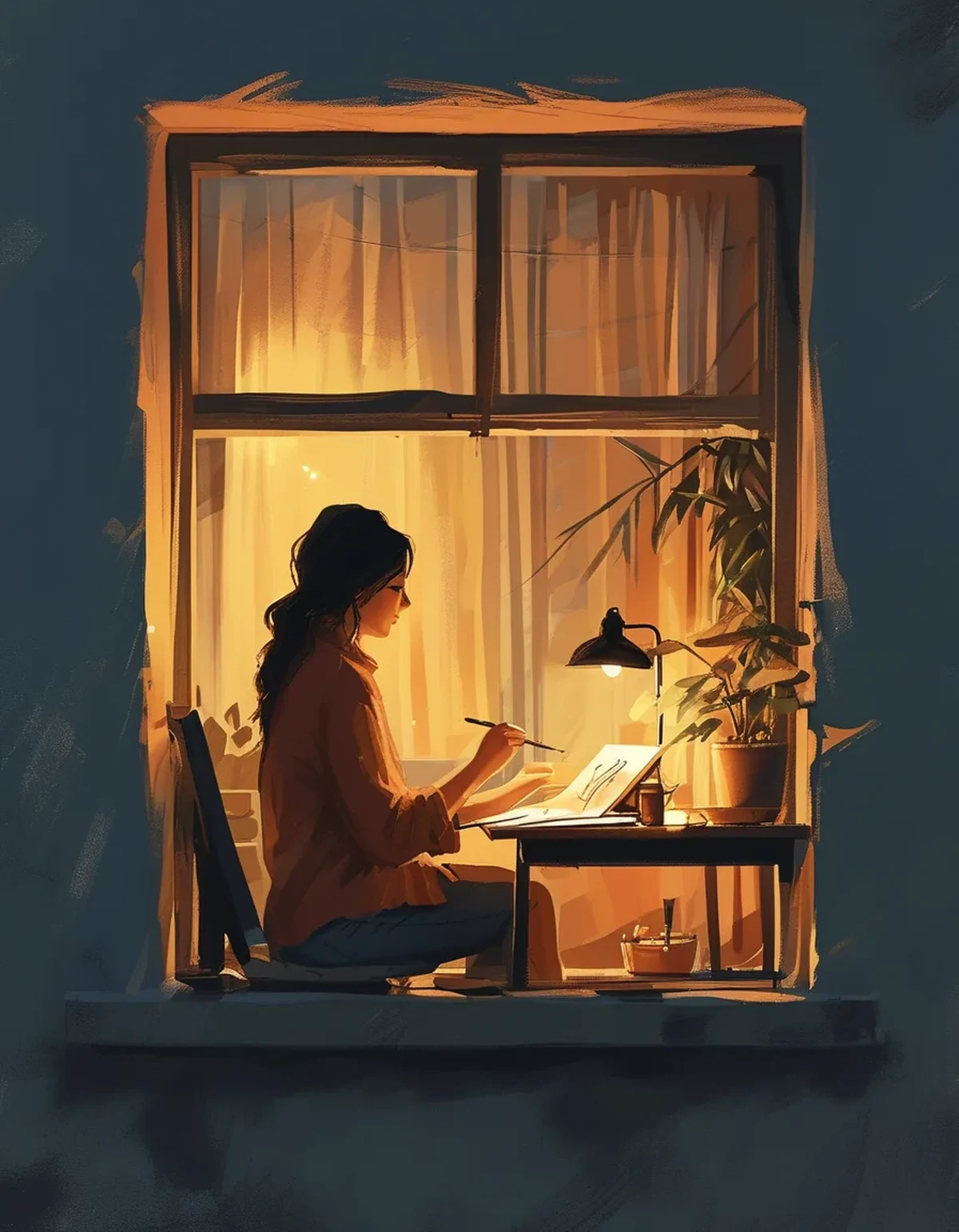
A dedicated task lamp. Not the ceiling light - a lamp aimed at the work surface. This does two things: it makes the work visible (colour judgment in dim light is genuinely unreliable), and it creates a lit pocket that reads as a working space rather than an evening room. A daylight-balanced bulb, somewhere around 5000K, is worth the small cost.
Leave the materials out. The single biggest predictor of whether a short session happens is whether setup is required. A sketchbook open on the table gets used; one in a drawer does not. This effect is much larger in winter, when the activation cost of anything is higher.
Move the slot earlier. Lunchtime, mid-afternoon, or immediately after work - before you sit down, not after. The slot that works in winter is usually not the slot that worked in summer, and the switch is worth making deliberately in October rather than after two months of failed evenings.
What Nobody Tells You About Seasonal Creative Slumps
It is predictable, which means you can schedule the adjustment before the collapse. If it happened last October and the one before, it is a pattern with a date, not a character flaw. Moving your slot in late September costs nothing and prevents the whole thing.
The quality drop is partly a lighting artifact. Work made under warm dim light routinely looks different in daylight - colours shift, values read differently. People conclude their work has gotten worse when they are actually just judging it under bad conditions.
Winter is genuinely better for some kinds of work. Long evenings suit sustained, detailed, indoor work in a way that bright restless summer evenings do not. Reframing the season as suited to different work, rather than as an obstacle to the same work, changes what you choose to make.
Skipping days is not the failure point - deciding the practice is over is. Everyone misses days. The people who keep practices going for years are simply the ones who treat a gap as a gap rather than as an ending.
The rebuild is faster than the original build. Re-establishing a lapsed habit typically takes a fraction of the time it took to create it, because the identity and the skills are still there. Two weeks, not two months.
FAQ: Winter Creative Practice Questions, Answered
Should I force myself to keep the same schedule?
Usually not worth it. If the slot has become genuinely hostile - dark, exhausted, cold - you are spending limited energy fighting the calendar rather than making work. Move the slot; keep the practice.
Is it worth buying a daylight lamp?
For anyone doing colour work, yes - judging colour under warm low light is unreliable, and the frustration of that shows up as a perceived skill drop. Even for drawing, a bright task light makes a noticeable difference to how long a session feels sustainable.
What if I have already lost two months?
Then you are starting a rebuild, and rebuilds are fast. Pick the smallest version, put the materials somewhere visible, choose a slot that is not the evening, and give it two weeks before evaluating. Skip the reckoning about the lost months - it costs energy you need for the restart.
Is the seasonal drop just seasonal affective disorder?
They are different things, though they can overlap. A schedule and light problem responds to schedule and light changes within a couple of weeks. If low mood, sleep changes, and loss of interest persist across most of the day and most days, that is worth raising with a doctor rather than solving with a lamp. This is general information, not medical advice.
TL;DR:
- The practice did not fail - its time slot did. Evening loses daylight and energy simultaneously in autumn.
- Define the smallest completable version (ten minutes, one page) and protect that, not the summer length.
- Add a task lamp aimed at the work surface. Overhead light signals end-of-day and makes colour judgment unreliable.
- Leave materials out. Setup cost is the main predictor of whether a short session happens.
- Move the slot earlier - before you sit down for the evening, not after.
- The collapse is annual and predictable, so make the adjustment in September rather than recovering in January.
The reason this feels like a personal failing every year is that it arrives looking like lost motivation. It is a scheduling problem with a known date, and moving one slot usually resolves the whole thing.
Keep Reading
This article is for general informational and styling purposes only. Fit, sizing, and product availability may vary.