The Five-Minute Sketch Habit: Drawing as a Daily Reset
The five-minute sketch habit asks nothing the blank-page fear assumes: no talent, no subject worthy of art, no outcome anyone sees. One pen, one everyday object, five minutes of looking — and the looking, it turns out, is the meditation. The tiniest creative habit worth having.

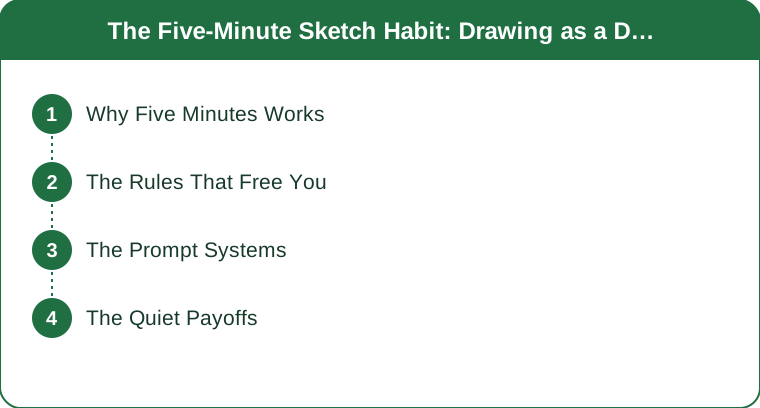
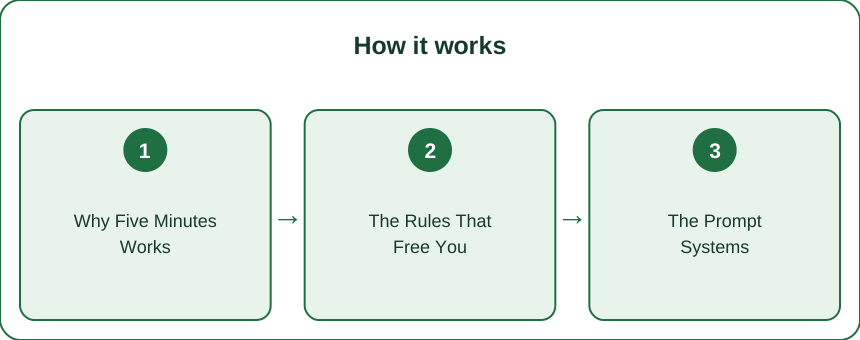
Why Five Minutes Works
The design logic: five minutes clears the blank-page fear’s activation threshold (the resistance is to STARTING; a timer this short makes starting trivially cheap), drawing is attention training in disguise (to draw a mug you must actually SEE the mug — the observing state is functionally mindfulness, with a souvenir), and daily-tiny beats weekly-grand (the sketch habit compounds like all habits — the hundredth five-minute sketch contains skills the first couldn’t imagine, acquired without a single ‘practice session’).
The Rules That Free You
The habit’s constitution: pen, not pencil (no erasing = no fussing = faster acceptance — the wobbly line stays and turns out to have charm), draw what’s THERE (the coffee cup, your other hand, the window latch — everyday objects beat imagined scenes for beginners by miles), ugly is expected and archived (the sketchbook is a diary, not a gallery — dating pages beats judging them), and the timer ends it (five minutes, pen down, unfinished is fine — finishing was never the point; looking was).

The Prompt Systems
When ‘draw anything’ stalls: the same-object series (your mug daily for a week — watching your own seeing improve is the habit’s first payoff), the room-corner lottery (whatever’s at 2 o’clock from where you sit), the one-line challenge (the whole object without lifting the pen — comedy and looseness guaranteed), the coffee-shop window seat (people in ten-second gestures — impossible, therefore liberating), and the walk-and-stop version (the sketch-one-thing walk crosses this habit with the daily stroll).
The Quiet Payoffs
What accumulates: a visibly calmer transition (the five-minute sketch between work and evening is a nervous-system gear change — the drawing-for-stress-relief literature applies at even this dose), the seeing upgrade (sketchers report the world getting more interesting — light, shadows and shapes start announcing themselves; attention, once trained, stays trained), the archive effect (a year of dated everyday sketches is an accidental memoir), and the permission spillover (the done-is-fine, ugly-is-archived muscle transfers to every perfectionism in the building). One pen, one object, five minutes: the reset button that draws back.
Pen not pencil, draw what’s there, timer ends it, date and keep. The five-minute sketch is meditation with a receipt — and the hundredth one will surprise you.
Keep Reading
This article is for general informational and styling purposes only. Fit, sizing, and product availability may vary.