Mandala Drawing for Anxiety: How This Repetitive Pattern Practice Calms a Racing Mind
Quick Answer: Mandala drawing means creating repeating patterns within a circle, and the structure itself is what calms anxious thoughts — your brain has a clear, predictable rule to follow instead of an open blank page. Start with a compass or a traced circle, divide it into simple sections, and repeat one small pattern around the ring.
A blank sketchbook page can feel like pressure disguised as relaxation. A circle with built-in structure removes that pressure almost entirely, because there’s no wrong way to fill in a repeating pattern.
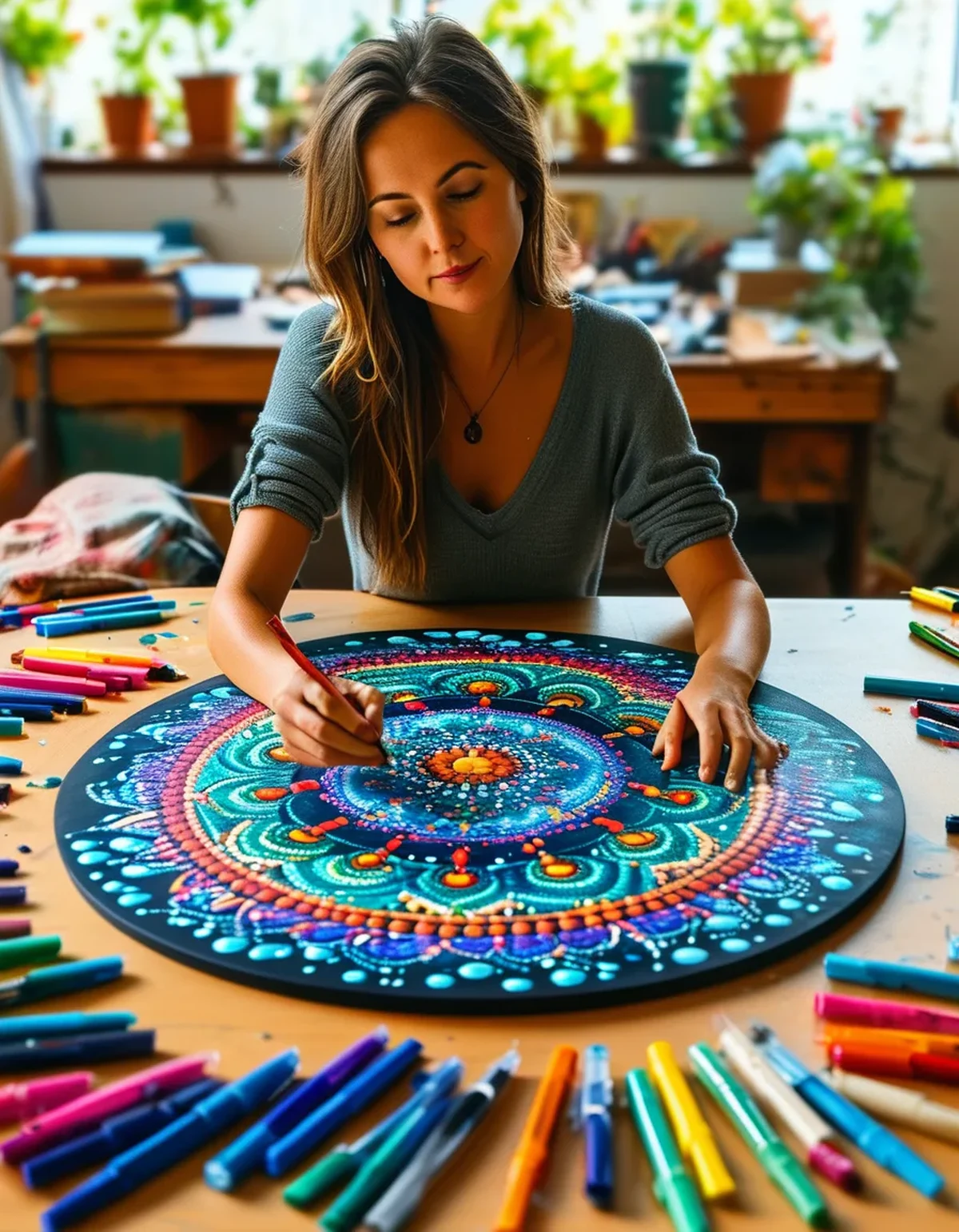
Why does drawing inside a circle feel calmer than a blank page?
A blank rectangular page carries an unspoken expectation of ‘making something good,’ which can spike anxiety rather than soothe it. A circle divided into repeating sections removes that expectation because the goal shifts from creating art to simply continuing a pattern.
This is the same psychological mechanism behind knitting or coloring books — repetitive, rule-based motion occupies the anxious part of the brain without demanding creative decisions.
How do you actually start a mandala with zero drawing skill?
Trace a circle using a cup, lid, or compass, then lightly draw a few guide lines through the center like slicing a pie into 8 equal sections. Pick one simple shape — a dot, a petal, a triangle — and repeat it identically in each section moving outward.
You don’t need symmetry to be perfect. Slight variation between sections is part of the handmade look, not a mistake to fix. If a straight line feels intimidating, a wavy or dotted line works just as well as a guide — the goal is a rough division, not drafting precision.
What supplies actually matter for this?
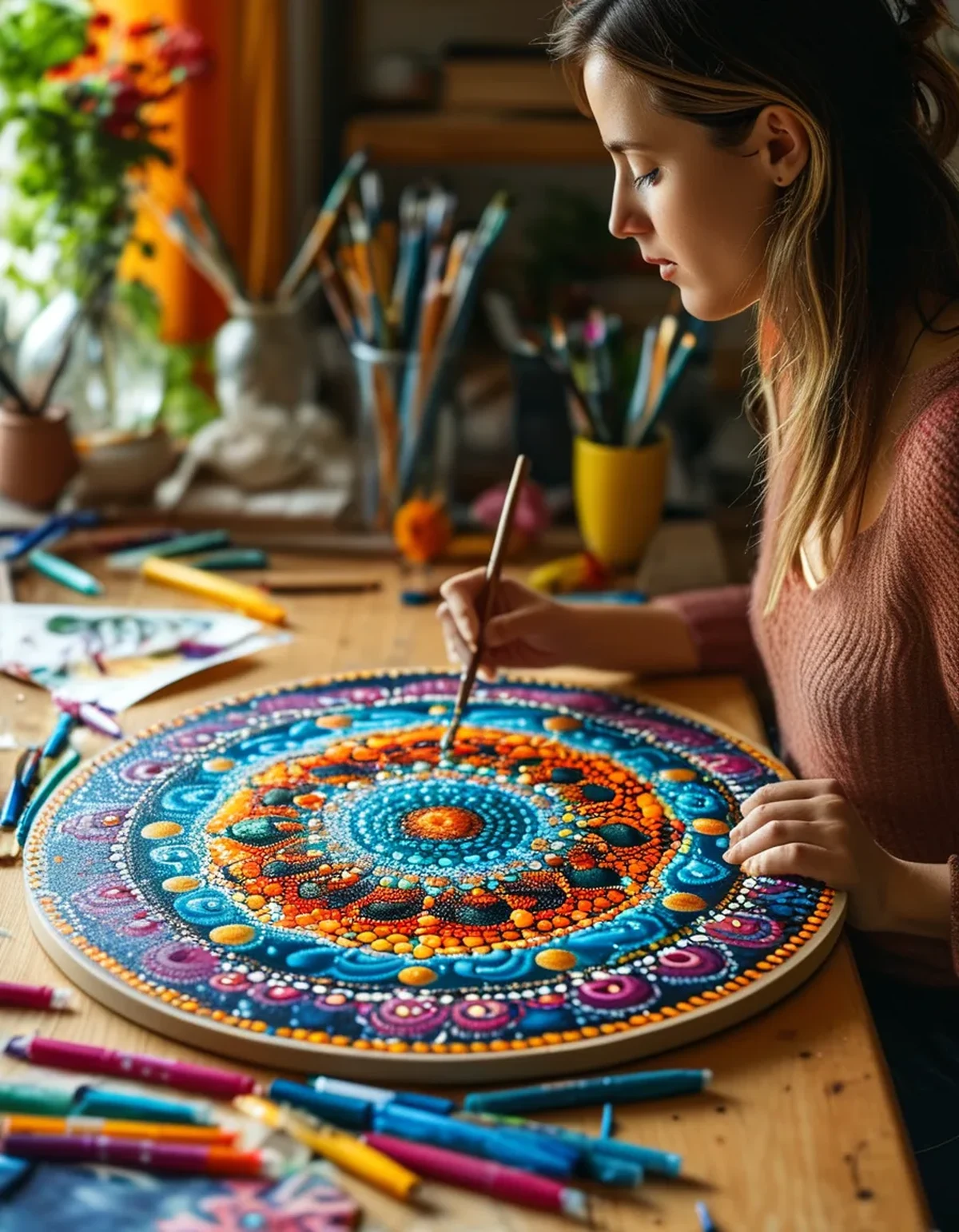
A basic set of fine-tip markers or colored pens and plain printer paper is genuinely enough to start — expensive supplies aren’t the barrier here. What matters more is a compass or a few round objects for tracing circles of different sizes.
- A compass, or a cup, lid, and small bowl for 3 circle sizes
- Fine-tip pens in 3-5 colors
- Plain or light-grid paper
- A ruler for the initial guide lines, if you want extra structure
Resist the urge to buy a full art store’s worth of supplies before your first session — starting with what’s already in a junk drawer removes one more barrier between you and actually trying it tonight.
How long should a session actually last?
10-15 minutes is a realistic starting session, and it’s often enough to notice a shift in how your thoughts feel. There’s no requirement to finish a mandala in one sitting — many people keep an in-progress one going across several short sessions during the week.
Set a timer if open-ended time feels intimidating; knowing there’s an end point can make it easier to start in the first place. Some people prefer stretching a single mandala across several evenings, treating it as an ongoing wind-down ritual rather than a one-time activity.
Myth vs Fact: Mandala Drawing
Myth: You need to be artistic to benefit from this. Fact: The calming effect comes from the repetitive motion and pattern-following, not from artistic skill — a wobbly, imperfect mandala works just as well as a precise one.
Myth: Mandalas have to follow traditional religious designs. Fact: While mandalas have roots in Buddhist and Hindu traditions, the anxiety-calming practice as used here is simply about repeating geometric patterns — you’re free to draw whatever shapes feel satisfying.
FAQ: Mandala Drawing for Anxiety Questions, Answered
Is mandala drawing the same as a coloring book?
They’re related but different — coloring books fill in a pattern someone else designed, while mandala drawing has you create the repeating pattern yourself, which some people find even more absorbing.
What if my pattern doesn’t come out even?
Unevenness is completely normal and doesn’t reduce the calming benefit — the goal is the repetitive process, not a perfectly symmetrical finished product.
Can I do this instead of meditation?
Many people use it as a form of active meditation rather than a replacement for seated practice — it works well specifically for people who find sitting still with eyes closed more stressful than calming.
What if I get bored halfway through?
Stopping partway through is completely fine — you can pick the same mandala back up later, switch to a smaller circle, or simply end the session there; there’s no rule requiring completion for the calming benefit to count.
TL;DR:
- Mandala drawing calms anxiety through structured repetition, not artistic skill
- Trace a circle, divide it into sections, and repeat one simple shape around the ring
- 10-15 minutes is a realistic session length — no need to finish in one sitting
- Uneven patterns are normal and don’t reduce the calming effect
Grab a cup to trace and one pen, and try a single ring of one repeated shape tonight.
Keep Reading
This article is for general informational and styling purposes only. Fit, sizing, and product availability may vary.