Watercolor for the Wound-Up: The Most Forgiving Unforgiving Medium
Watercolor has a reputation as the difficult medium — water goes where it wants, pigment blooms uninvited, control is partial at best. Which is exactly why it calms wound-up minds: the medium physically teaches letting go. The beginner’s guide to painting like nobody’s grading.

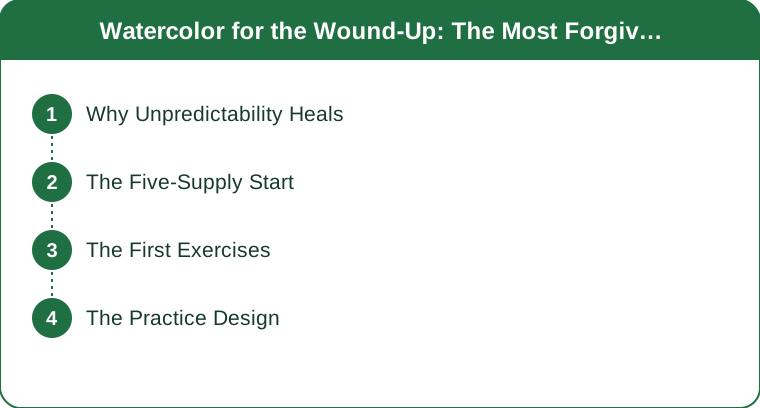
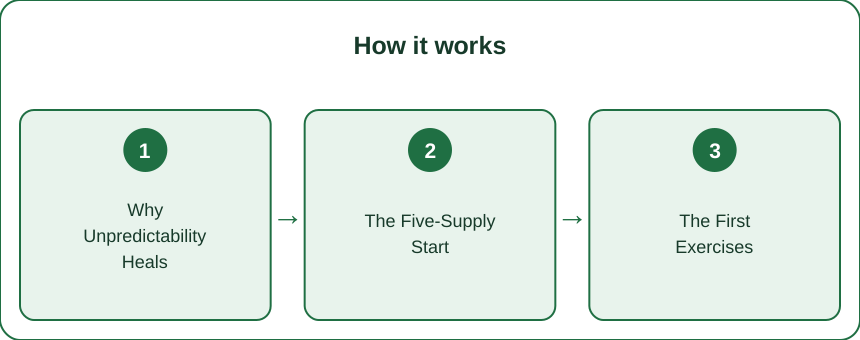
Why Unpredictability Heals
The therapeutic mechanism: watercolor punishes over-control (grip the brush and fuss the paper and it rewards you with mud — the medium literally trains loosening), it forces present-tense attention (wet paint waits for no one; the watching-pigment-spread state is flow-state bait), and ‘mistakes’ become features (the accidental bloom that makes the painting — the reframe rehearsal your inner perfectionist needs weekly). Art-therapy research consistently shows cortisol and anxiety reductions from process-focused art-making — no talent prerequisite found.
The Five-Supply Start
The whole kit: a student-grade 12-pan set (fine; the paint snobbery can wait years), one round brush size 8 (the do-everything brush), REAL watercolor paper (the one non-negotiable — 300gsm cold-press; regular paper buckles and ruins the magic; buy the cheap pad of the right thing over the nice pad of the wrong thing), a jar of water and a rag. Total: a modest dinner’s cost, a decade’s supply of calm.

The First Exercises
The letting-go curriculum: flat washes (one color, even-ish coverage — learning water-to-pigment ratios by feel), wet-on-wet blooms (drop color into wet paper and just WATCH — the medium’s signature magic, zero skill required, endlessly mesmerizing), gradient skies (dark to light in one pass — mess it up gloriously), and the one-brush landscape (three horizontal washes: sky, hills, foreground — an actual painting on day one). The rule for all: no pencil sketching first, no fixing after. The exercise IS the acceptance.
The Practice Design
Making it a habit: small paper, short sessions (a postcard-sized wash takes ten minutes — the daily-doable dose), the dedicated tray (supplies visible and pre-staged; the friction audit applies to hobbies too), paint at the transition hours (the post-work wind-down slot where the phone usually wins), and the anti-perfectionist policies (date the back, keep everything in a box, never rank them — the box becomes a mood archive, not a portfolio). The medium’s lesson, learned wet: control is optional, attention is everything, and blooms happen. Paint accordingly; live similarly.
Real paper, one brush, wet-on-wet, keep everything. Watercolor teaches what therapy bills for — control released, attention gathered, ten minutes at a time.
Keep Reading
This article is for general informational and styling purposes only. Fit, sizing, and product availability may vary.