Zentangle: The Structured Doodling Method Built Specifically for Anxious Minds
Open-ended creative advice like ‘just draw whatever you feel’ tends to backfire for anxious minds, which often want fewer decisions, not more blank-page freedom. Zentangle was built around exactly that insight — small tiles, repeatable patterns, no eraser, no plan. Here is why its structure works better for anxious beginners than open-ended art, the actual method, and how to start your first tile tonight.
Why Structure Works Better Than Open-Ended Art
The anxiety-specific fit: the the-blank-page-is-a-decision-avalanche (the a blank sheet with no prompt forcing an anxious mind through dozens of unresolved choices before a single mark is made — the too-many-decisions-is-the-opposite-of-calming), the the-tiny-canvas-lowers-stakes (the Zentangle’s small standard tile size making the whole project feel low-stakes rather than a commitment — the small-canvas-small-pressure), the the-no-erasing-rule (the deliberate no-eraser philosophy removing the perfectionist urge to fix every line — the mistakes-become-part-of-the-pattern-not-failures), the the-repeatable-patterns-remove-planning (the working from a small set of known repeatable strokes instead of needing an original idea — the pattern-library-replaces-blank-page-panic), the the-unplanned-outcome-is-the-point (the not knowing how the finished tile will look being explicitly part of the practice, not a flaw — the letting-go-of-the-outcome-is-the-exercise), and the reframe (the structure itself as the anxiety-management tool — Zentangle succeeds with anxious beginners precisely because it removes the open-endedness that makes generic ‘just create’ advice so hard to follow).
The Actual Method
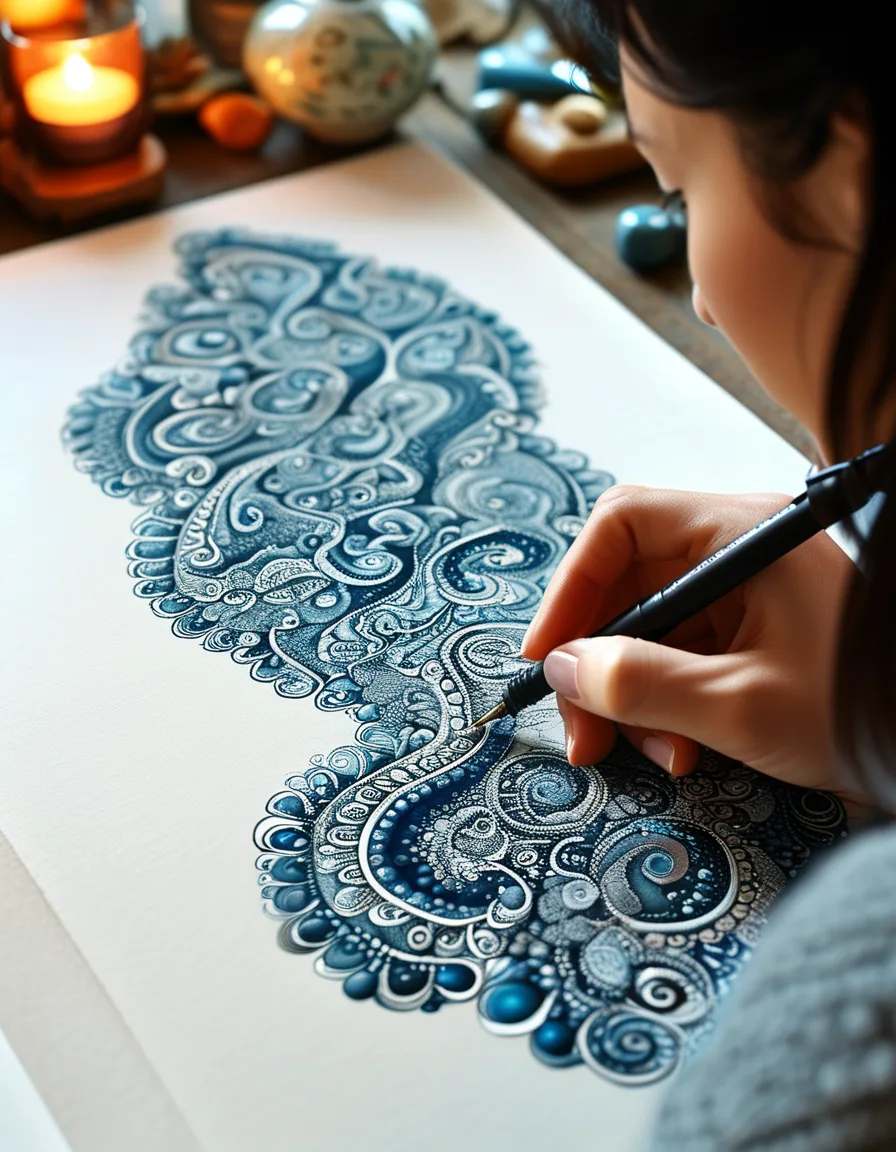
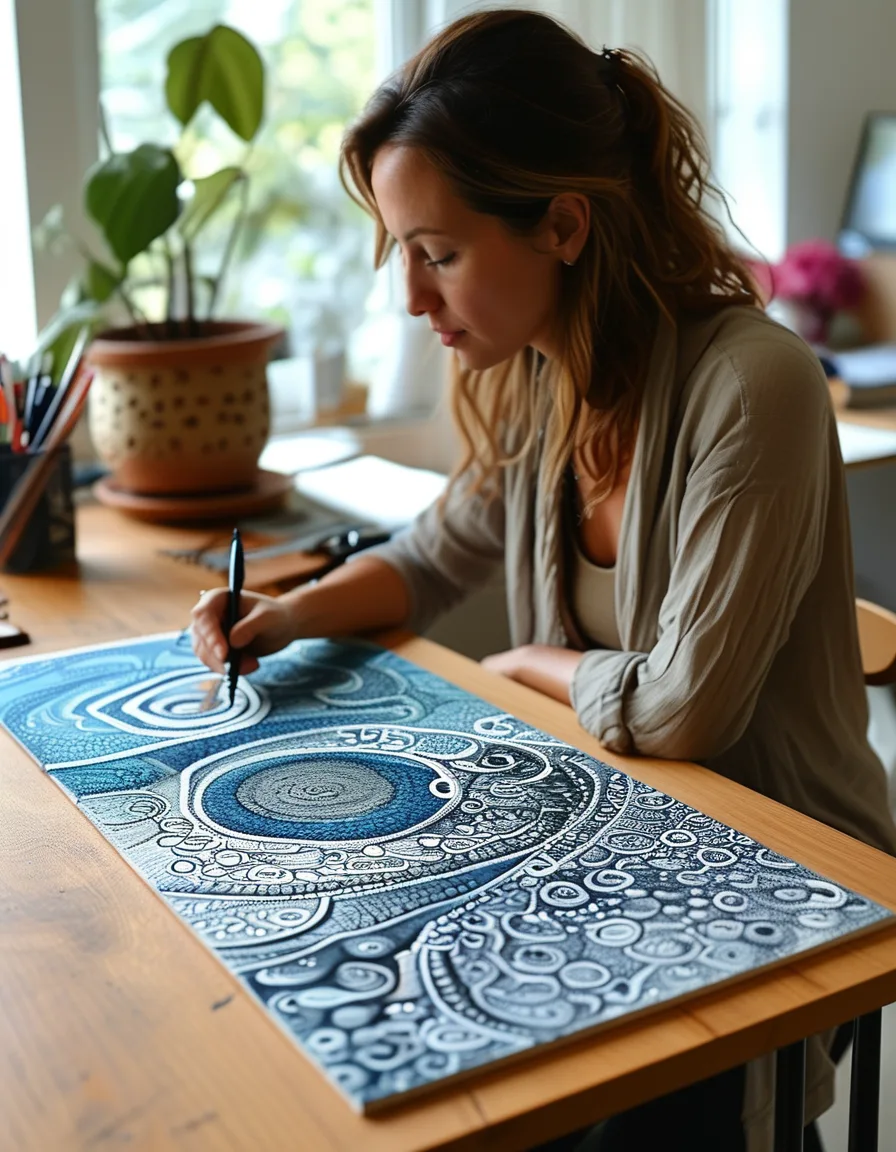
The real steps: the draw-the-border (the a light pencil border framing the small tile, defining the space before anything else — the border-first-contains-the-anxiety), the the-string-line (the one or a few light pencil lines dividing the tile into loose sections, called the string — the the-string-is-just-a-guide-not-a-plan), the the-fill-sections-with-tangles (the filling each section with one simple repeated pattern, called a tangle, chosen from a known small library — the one-pattern-per-section-keeps-it-simple), the the-shade-for-depth (the light pencil shading added at the end for dimension, entirely optional — the shading-is-the-finishing-touch-not-required), the the-no-planning-the-whole-thing (the deciding each section’s pattern only when you get to it, not up front — the decide-as-you-go-not-in-advance), and the frame (the method as border, string, tangle-by-tangle filling, and optional shading — a five-minute sequence with almost no decisions required at any single step).
How to Start Your First Tile Tonight
The lowest-friction entry: the use-any-small-square-paper (the a three-and-a-half inch square of any paper working fine, no special kit required from the adult-coloring-for-calm-guide logic — the no-purchase-necessary-to-start), the the-learn-three-tangles-only (the picking just three simple repeatable patterns to start, rather than trying to learn dozens — the three-is-plenty-for-a-first-tile), the the-set-a-five-minute-timer (the giving the first attempt a short deliberate time limit to keep it low-pressure — the short-session-removes-the-commitment-fear), the the-any-pen-works (the a basic fine-tip pen being all that’s needed, no art supplies investment required — the accessible-with-what-you-already-own), the the-do-it-before-bed (the a short tile session working well as a wind-down ritual before sleep — the calming-bedtime-alternative-to-a-screen), and the frame (the tonight-ready start as any small paper, three known patterns, a five-minute timer, and a basic pen — the entire barrier to entry is small enough to clear in the next ten minutes).
Zentangle works better for anxious beginners than open-ended creative advice because its structure — a small tile, a light border, a rough guide line, and a small library of repeatable patterns — removes the decision-heavy blank-page problem that makes ‘just draw whatever you feel’ so hard to follow. The actual method is simple: draw a border, add a loose guiding string line, fill each resulting section with one repeated pattern chosen as you go, and finish with optional light shading for depth. Starting tonight requires nothing more than a small square of paper, three simple patterns learned in advance, a basic pen, and a five-minute timer — a low-stakes wind-down ritual with almost no decisions required at any single step.
Keep Reading
This article is for general informational and styling purposes only. Fit, sizing, and product availability may vary.